
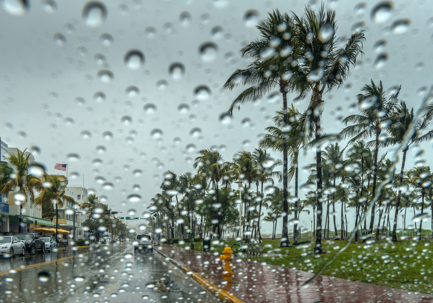
How Weather Dangers Cause Bonita Springs Car Accidents [2026 Safety Guide]
What You Need to Know About Weather Dangers on Our Roads
We understand that driving in Southwest Florida's unpredictable weather can be frightening, and our team wants you to stay safe out there. Weather-related accidents are a serious threat in Bonita Springs, with critical safety insights every driver should understand:
• The first 10-20 minutes after rain begins are the most dangerous - oil residue mixes with water creating extremely slick conditions that reduce tire traction by up to 50%.
• Hydroplaning occurs at surprisingly low speeds - your vehicle can lose road contact completely with just 0.1 inch of water at speeds as low as 35 mph.
• Wet roads require 30-50% longer stopping distances - what takes 271 feet on dry pavement needs 333 feet when wet, making following distance crucial.
• Weather alone doesn't excuse negligent driving legally - Florida's modified comparative negligence rule means you can't recover damages if you're more than 50% at fault, regardless of conditions.
• Document everything immediately after a weather-related crash - take photos of road conditions, collect witness statements, and secure traffic camera footage within 30 days before it's overwritten.
Don't let bad weather catch you unprepared. The key to surviving Southwest Florida's unpredictable conditions is adjusting your driving behavior before roads become dangerous. Slow down, increase following distance, and remember that arriving safely matters more than arriving on time.
Bonita Springs car accidents spike dramatically during rainfall, with 1 in 5 motor vehicle accidents nationwide being weather-related. Most of these crashes occur on wet pavement (70%) and during active rainfall (46%), creating significant hazards for drivers like you.
Lee County experienced 6,928 traffic crashes in 2023 alone—an average of 19 accidents daily. These collisions resulted in 99 fatalities and 5,663 injuries across the county. The risk jumps during the first 10-20 minutes after rain begins, when oil residue creates dangerously slick road conditions.
Sudden downpours in Southwest Florida can quickly transform familiar roads into hazardous driving environments. Hydroplaning becomes an immediate threat as your tires encounter more water than they can disperse, causing your vehicle to lose contact with the road completely. This dangerous situation was tragically demonstrated during a head-on collision that occurred during a late Friday morning downpour at Old US 41 and Imperial Harbor.
We've seen too many families suffer because of preventable weather-related accidents. This guide reveals the hidden weather dangers causing crashes in our area and provides crucial information to help you stay safe on Southwest Florida's roads. Whether you're dealing with sudden rain, coastal fog, or flooded roadways, understanding these risks could prevent you from becoming another statistic.
The Hidden Weather Dangers Putting You at Risk
Weather conditions throughout Southwest Florida create serious hazards for drivers, and Bonita Springs faces some unique challenges that catch even experienced motorists off guard. We understand how quickly conditions can change, and these weather traps consistently cause serious accidents across our local roadways.
When Rain Turns Roads Into Ice Rinks
The most dangerous moment on your daily commute happens within the first 10-20 minutes after rain starts falling. As those initial raindrops hit the pavement, they mix with accumulated oils and create an extremely slick coating that reduces your tire traction by up to 50%. Even if you've driven these Bonita Springs roads for years, this critical window creates perfect conditions for losing control.
Despite Florida's "Sunshine State" reputation, 70% of weather-related accidents happen on wet pavement while 46% occur during active rainfall. Those afternoon thunderstorms can transform your familiar route into a hazardous surface faster than you can react.
Hydroplaning doesn't just happen at highway speeds. Your vehicle can lose contact with the road completely with just 0.1 inch of water at speeds as low as 35 mph. This explains why serious collisions, like the head-on crash at Old US 41 and Imperial Harbor during a downpour, continue happening throughout our rainy season.
Flash Floods That Appear From Nowhere
Bonita Springs receives about 55 inches of rain annually, and that water has to go somewhere. Just six inches of moving water can make your vehicle lose traction completely, while 12 inches can carry away most cars.
Summer 2017 showed us just how vulnerable our city can be. When Invest 92L and Hurricane Irma hit less than two weeks apart, some areas saw water levels rise 6.5 feet higher than normal. Roads that seemed passable one minute became completely impassable the next.
You can't judge a puddle's depth by looking at it. Low-lying areas throughout Bonita Springs transform into dangerous flood zones within minutes when stormwater overwhelms our drainage systems. What looks like a shallow puddle could be deep enough to disable your car or worse.
Coastal Fog That Steals Your Vision
Our unique coastal location creates perfect conditions for dense fog formation that appears without warning. Unlike rain, which you can see coming, fog gives you just seconds to react. Dense fog can cut your sight distance to less than a quarter mile, leaving you essentially driving blind.
"Super fog"—a dangerous mix of condensation and smoke—can limit visibility to just a few feet. Under these conditions, you might drift between lanes without realizing it because you can't see the road markings.
Here's a simple rule that could save your life: if visibility drops to 100 feet, any speed above 30-35 mph means you can't stop in time if something appears ahead of you. Fog contributes to about 3% of all weather-related crashes, but the severity of these accidents tends to be much higher because of the surprise factor.
What Weather Does to Your Vehicle and Your Choices Behind the Wheel
Rain changes everything about how your car responds on Bonita Springs roads. We see the aftermath of these weather-related car accidents regularly at our firm, and understanding these changes could keep you out of our office altogether.
Stopping distances that catch drivers off guard
Wet roads demand 30% to 50% more stopping distance compared to dry conditions. That means your vehicle needs 333 feet to stop completely when wet, compared to just 271 feet on dry pavement. Most drivers never consider this math until it's too late.
Rain creates a slick barrier between your tires and the road surface. Even quick reflexes can't overcome physics - your car will slide further before stopping completely. The most dangerous period hits during those first 10-15 minutes after rain starts, when oil residue turns roads into skating rinks.
Hydroplaning happens faster than you think
Your car can lose road contact at just 35 mph with only 0.1 inch of water. This isn't Hollywood drama - it's simple physics when your tires can't push water away fast enough.
Water builds up in front of your wheels and slides underneath, creating a film that separates your tires from the road. You become a passenger in your own vehicle, with no steering or braking control. We've represented clients who experienced this terrifying moment firsthand.
Overconfidence on roads you know
25% of speeding-related truck fatalities happen during bad weather, and many involve drivers who thought they knew their route well enough to maintain normal speeds. Large vehicle drivers often assume their SUVs or trucks handle better in storms - a dangerous misconception.
One safety expert puts it bluntly: "Sitting higher off the road than everyone else only means you'll have a better view of the passing countryside as you slam sideways into a snowbank". Four-wheel drive helps with acceleration but offers zero advantage when you need to stop.
The majority of weather-related accidents happen on wet pavement, often involving drivers who simply refused to adjust their behavior when conditions changed. Don't become another case file because you thought familiar roads stay safe in bad weather.
The Legal Maze After Your Weather-Related Accident
When you're hurt in a weather-related crash, the legal challenges feel overwhelming. Insurance companies and opposing attorneys will use every tactic to minimize your claim, often pointing to weather conditions as an excuse to reduce or deny compensation altogether.
Florida's New 50% Rule Changes Everything
Since March 2023, Florida operates under modified comparative negligence laws found in Section 768.81 of the Florida Statutes. This critical change means you cannot recover any damages if you're found more than 50% at fault. Zero compensation. Nothing.
Weather-related accidents make this rule particularly dangerous for injury victims. Courts examine whether you took reasonable precautions given the conditions. Did you slow down? Increase your following distance? Use headlights during rain? These details determine whether you can recover compensation for your injuries and losses.
Weather Doesn't Excuse Dangerous Driving
Despite what insurance companies want you to believe, bad weather rarely excuses negligent driving behavior. Florida law requires all drivers to exercise reasonable care and adjust their driving for adverse conditions. This includes reducing speed, maintaining safe distances, and using proper lighting during storms.
The bottom line: if you cannot drive safely in the conditions, you shouldn't be driving at all. Weather alone never justifies putting others at risk.
Your PIP Coverage Has Serious Limits
Florida's Personal Injury Protection covers 80% of medical bills and 60% of lost wages up to $10,000. This applies regardless of who caused your weather-related crash. However, you must seek medical treatment within 14 days or risk losing these benefits. PIP won't cover property damage, pain and suffering, or emotional distress.
How Insurance Companies Use Weather Against You
Insurance adjusters have perfected their weather-related denial tactics. They'll claim your accident was "inevitable" due to conditions, call it an "act of God" beyond anyone's control, or argue "you should have anticipated the danger". These tactics exist solely to protect their bottom line, not your family's future.
Don't let them use weather as an excuse to deny you fair compensation. The key lies in proving how the other driver failed to adjust their behavior appropriately, regardless of conditions.
We understand that dealing with insurance companies after a weather-related accident can feel impossible. If you've been injured in an accident and need a lawyer, call Pittman Law Firm, P.L. today for a free consultation. We'll fight to ensure you receive the compensation you deserve, not the minimal settlement insurance companies offer.
What You Need to Do After a Weather-Related Accident
Weather-related crashes can leave you feeling overwhelmed and uncertain about your next steps. Don't let confusion about the legal process make your situation worse.
Take These Critical Steps Right Away
First, check yourself and passengers for injuries and call 911 if anyone needs medical attention. Your safety comes before everything else. Move your vehicle out of traffic if possible and turn on hazard lights.
When exchanging information with other drivers, get their names, contact details, insurance information, and vehicle data. Here's what we always tell our clients: avoid discussing who was at fault—simply stick to exchanging necessary information. Anything you say can be used against you later.
Document Everything While You Can
Think of documentation as building your case from the very first moment. Take multiple photos showing road conditions (especially standing water or slick surfaces), vehicle damage, final positions, nearby traffic signs, and current precipitation/visibility issues. Record specific details about temperature, wind conditions, and other environmental factors that contributed to your accident.
Don't overlook witness statements - collect contact information from anyone who observed how the weather played a role. These people might disappear from the scene quickly, but their testimony could be crucial later.
Secure Evidence Before It Vanishes
You have a very limited window to preserve crucial evidence. Traffic camera footage gets overwritten within 30 days, so act fast. Request official weather reports from the National Weather Service documenting exact conditions at your accident's time and location.
That traffic camera footage can demonstrate what the other driver did or failed to do before the collision. We've seen cases won and lost based on this type of evidence.
Call Us Before You Talk to Insurance Companies
Here's something most people don't realize: you have no obligation to give detailed statements to other drivers' insurance companies until you get legal advice. Insurance adjusters often contact victims within hours, hoping to get recorded statements while you're still shaken up.
If you've been injured in an accident and need a lawyer, call Pittman Law Firm, P.L. today for a free consultation. Weather adds unique complexities to accident liability that most people don't understand. We treat every case like we were handling it for a family member, and we'll fight to protect your rights while you focus on recovery.
Don't get lost in all the phone calls and paperwork. Let us handle the insurance companies while you concentrate on getting better.
Conclusion
Weather conditions pose significant risks on Bonita Springs roads throughout the year. Accordingly, understanding these hidden dangers could save your life during unexpected downpours, coastal fog, or flash flooding situations. Most weather-related accidents happen because drivers fail to adjust their behavior when conditions deteriorate.
Remember that your vehicle needs 30-50% more distance to stop on wet roads, while hydroplaning can occur at speeds as low as 35 mph. Therefore, reducing your speed, increasing following distance, and maintaining proper tire tread become essential safety measures during Florida's frequent rain events.
Florida's modified comparative negligence rule adds another layer of complexity to weather-related crashes. This rule prevents recovery of damages if you're found more than 50% responsible for the accident. Insurance companies often attempt to shift blame by emphasizing weather conditions, making proper documentation crucial after any collision.
Should you find yourself involved in a weather-related accident, take immediate steps to document conditions, collect witness information, and secure video evidence. Contacting a qualified attorney before speaking with insurance adjusters protects your rights and ensures fair treatment.
Weather might create hazardous driving conditions, but ultimately, every driver bears responsibility for adjusting their behavior appropriately. Your safety depends on respecting these powerful forces rather than testing their limits. Stay alert, slow down when conditions change, and recognize that reaching your destination safely matters more than arriving on time.
FAQs
Q1. How does rainfall affect driving conditions in Bonita Springs? Rainfall significantly increases accident risks in Bonita Springs. The first 10-20 minutes after rain begins are particularly dangerous, as oil residue mixes with water, creating extremely slick road conditions. This can reduce tire traction by up to 50%, making it difficult for even experienced drivers to maintain control.
Q2. At what speed can hydroplaning occur? Contrary to popular belief, hydroplaning can occur at speeds as low as 35 mph when encountering just 0.1 inch of water on the road. This happens when tires encounter more water than they can disperse, causing the vehicle to lose contact with the road surface.
Q3. How does Florida's modified comparative negligence rule affect weather-related accident claims? Under Florida's modified comparative negligence rule, you can only recover damages if you're 50% or less responsible for the accident. In weather-related crashes, courts examine whether each driver took reasonable precautions given the conditions. This rule directly impacts your ability to recover compensation after accidents involving factors like hydroplaning or poor visibility.
Q4. What should I do immediately after a weather-related car accident in Bonita Springs? After a weather-related accident, first check for injuries and call 911 if needed. Move your vehicle out of traffic if possible and turn on hazard lights. Exchange information with other drivers, but avoid discussing fault. Take photos documenting road conditions, vehicle damage, and weather factors. Collect witness statements and consider contacting a car accident attorney before giving detailed statements to insurance companies.
Q5. How can I protect myself from weather-related driving hazards in Bonita Springs? To stay safe during adverse weather conditions in Bonita Springs, reduce your speed, increase following distance, and ensure proper tire maintenance. Be especially cautious during the first 10-15 minutes of rainfall when roads are most slippery. In foggy conditions, use low beam headlights and reduce speed significantly. Always adjust your driving behavior to match the current weather conditions, even on familiar roads.
The information on this website is for general information purposes only. Nothing on this site should be taken as legal advice for any individual case or situation. This information is not intended to create, and receipt or viewing does not constitute an attorney-client relationship.