
Bicycle Safety Tips: A Fort Myers Rider's Guide to Accident Prevention [2026]
What Every Fort Myers Cyclist Needs to Know
Cycling in Fort Myers carries real dangers. Florida ranks highest in the nation for cycling fatalities, but you can protect yourself and your legal rights by following the right safety steps.
Here's what keeps you safe on Southwest Florida roads:
• Get the right safety gear: A quality helmet cuts your head injury risk by 60% and reduces your chance of death by 37%. You also need front and rear lights visible from 500 feet - it's the law after dark.
• Ride like the vehicle you are: Florida law gives you the same rights and duties as any motorist. Stay as far right as you can, signal your turns 100 feet ahead, and obey every traffic signal.
• Stay defensive: Watch for distracted drivers, avoid blind spots, never wear headphones, and always have an escape route planned while you scan for trouble ahead.
• Document everything after a crash: Call 911 right away, take photos of everything, get witness information, and talk to a bicycle accident attorney before you accept any settlement offers.
• Make yourself seen: Use reflective gear and bright clothing, make eye contact with drivers at intersections, and position yourself slightly left when approaching intersections so drivers can see you.
These steps work together to keep you safe. Your attention to these details could mean the difference between getting home safely and becoming another statistic.
857 cyclists died in U.S. traffic accidents in 2018 alone. For Fort Myers riders, these aren't just numbers - they represent real danger every time you get on your bike.
Florida law treats you the same as any motorist when you're on the road. But Cleveland Avenue in Fort Myers has seen 14 pedestrian crashes in just three years, including two deaths. Distracted driving causes about 30% of Fort Myers crashes, and many bicycle accidents happen when drivers don't yield at crossings or in bike lanes.
Bicycle safety isn't optional on Florida roads - it's essential for your survival. This guide gives you specific safety tips for Fort Myers conditions, from the gear that protects you to the road rules that keep you alive. Whether you ride every day or just on weekends, understanding these safety steps can dramatically cut your risk of becoming another accident victim.
The Right Gear Can Save Your Life on Fort Myers Roads
You are more vulnerable on a bicycle than in a car. That's just the reality of cycling in Fort Myers, where proper safety equipment becomes your first line of defense against serious injury. The right gear doesn't just protect you when accidents happen—it helps prevent them entirely.
Your Helmet: The Most Important Decision You'll Make
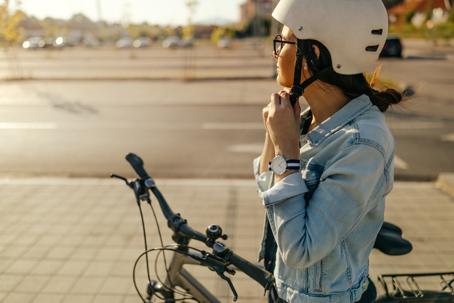
Your helmet is your most critical piece of safety equipment, period. Florida law requires cyclists under 16 to wear helmets, but we believe every rider deserves this protection. A quality helmet can reduce head injury risk by up to 60% and decrease fatality likelihood by 37%.
When you're selecting a properly fitted helmet, make sure it fits snugly with no more than two fingers' width between chin and strap. The front edge should sit one inch or less above your eyebrows. Fort Myers' hot climate makes ventilation especially important—look for helmets with adequate airflow. Remember to replace your helmet after any impact or every five years, as the protective foam deteriorates over time.
Be Seen Before It's Too Late
Florida law requires cyclists to use both a front white light and rear red light visible from 500 feet away when riding at night. For Fort Myers' urban environment, many experts recommend flashing lights to stand out among all the existing light sources.
Don't stop at basic lights. Reflective clothing dramatically increases your visibility in ways that could save your life. Unlike fluorescent colors that need UV rays to work, reflective materials bounce light directly back to drivers, making them far more effective at night. Apply reflective materials to moving parts like your ankles and knees—the motion patterns grab drivers' attention more easily.
Protection That Moves With You
Protective gear like elbow and knee pads provide lightweight impact protection that can prevent serious injuries during falls. Look for guards with breathable panels designed for Florida's climate, secure grippers that won't slide during pedaling, and quality impact-absorbing foam. For long rides in Fort Myers' heat, choose protective clothing with ventilated backs and mesh panels.
Keep Your Bike Road-Ready
Your bike's mechanical condition directly affects your safety. Keep essential maintenance tools with you: a multi-tool, tire levers, and patch kit at minimum. For routine maintenance at home, invest in Allen wrenches (2-12mm), open-end wrenches, chain cleaning supplies, and a floor pump with gauge. Regular maintenance prevents mechanical failures that could lead to accidents—making these tools a vital part of your safety equipment.
We understand that cycling accidents can have a major impact on your life, and proper equipment is your best defense against becoming another statistic on Fort Myers roads.
Rules of the Road: What Every Fort Myers Cyclist Must Know
Florida's roads can be deadly for cyclists, and we've seen too many cases where riders didn't understand their legal rights and responsibilities. Knowing and following bicycle traffic laws isn't just about avoiding tickets—it's about protecting your life and your legal position if the worst happens.
Florida consistently ranks among the most dangerous states for cyclists, with the highest percentage of cycling deaths at 5.5% of all traffic fatalities. We've handled cases where proper knowledge of these laws made the difference between a successful claim and a denied one.
Your Legal Status as a Cyclist
According to Florida Statute §316.2065(1), bicycles are legally defined as vehicles. This means you have the same rights and duties as motorists when riding on public roads. You must obey all traffic signals, stop at red lights, and follow the same rules as cars.
Fort Myers has implemented specific local ordinances to address safety concerns. Cycling on sidewalks is banned in downtown Fort Myers. Additionally, electric bikes are prohibited on public sidewalks throughout the city. We've seen cyclists ticketed for violating these local rules, so don't assume you can ride anywhere.
Bike Lane Rules and Road Sharing
When traveling slower than traffic and a bike lane exists, you should use it. If no bike lane is available, Florida law requires cyclists to ride "as far to the right of the roadway as practicable". However, there are important exceptions to this rule. You may move from the right when:
- Overtaking another vehicle
- Preparing for a left turn
- Avoiding hazards or unsafe conditions
- Navigating lanes too narrow to share safely with cars
Group riders, pay attention: cyclists may ride two abreast as long as they don't impede traffic and stay within a single lane. Remember that motorists must give cyclists at least three feet of clearance when passing—this is state law. When drivers violate this law and cause accidents, we use it to build strong cases for our clients.
Hand Signals: Your Legal Requirement
Clear communication with drivers dramatically reduces accident risk and strengthens your legal position. Hand signals must be given at least 100 feet before turning. The legally recognized signals include:
- Left turn: Extend your left arm horizontally
- Right turn: Either extend your right arm horizontally OR bend your left arm upward at a 90-degree angle
- Stopping/slowing: Extend your left arm downward with palm facing backward
Recent research shows that straight-arm signals are almost universally understood, whereas bent-arm right-turn signals were correctly interpreted by fewer than 25% of drivers. We recommend using the straight-arm right turn signal—it's clearer and helps prove you followed proper signaling if an accident occurs.
Right-of-way rules at Intersections and Driveways
At four-way stops, cyclists follow the same right-of-way rules as vehicles. When emerging from an alley, driveway, or building, you must yield to pedestrians on sidewalks and to all vehicles on the roadway.
For crossings, bicyclists riding on sidewalks must yield to pedestrians and provide an audible signal before passing them. At driveways, maintain vigilance since drivers often fail to check for cyclists when exiting.
Understanding these rules not only helps prevent accidents but also strengthens your position if you need to make a bicycle accident claim after a collision. We've seen cases where cyclists who followed all traffic laws received significantly better settlements than those who didn't.
Your Safety Depends on Staying Alert
Staying alert while cycling means the difference between making it home safely and becoming another Fort Myers accident statistic. Even experienced riders face serious risks on our busy roads.
Watch Out for Distracted and Impaired Drivers
We see the devastating results of distracted driving every day in our practice. In 2020 alone, 3,142 people died in crashes caused by distracted driving. Florida leads the nation in cycling deaths per capita, and we don't want you to become another case we have to handle.
Look for these warning signs of distracted drivers:
- Weaving between lanes
- Inconsistent speeds
- Drivers looking down at phones instead of the road
Never assume drivers see you—make eye contact at intersections to confirm they've acknowledged your presence. This simple step can save your life.
Stay Out of Blind Spots and Low Visibility Areas
Large trucks create massive blind spots where drivers simply cannot see cyclists. Don't hover directly next to any vehicle. Remember this rule: if you can't see the driver's eyes in their mirror, they can't see you.
At night, always use front white and rear red lights visible from at least 500 feet away. This isn't just good advice—it's Florida law.
Don't Distract Yourself While Riding
Nearly one-third of cyclists exhibit distracted behavior. Keep both hands on the handlebars except when signaling turns. We cannot stress this enough: avoid wearing headphones or earbuds—they prevent you from hearing approaching cars, horns, or emergency sirens. Your hearing must remain unimpaired to detect potential dangers.
Practice Defensive Riding on Fort Myers Roads
Defensive riding means expecting that drivers may not yield and being ready to stop suddenly. Scan constantly—look ahead for potential hazards rather than just what's immediately in front of you.
When approaching intersections, move slightly left to increase your visibility to drivers. Most importantly, always position yourself with an "escape route" in mind. This defensive mindset has prevented countless accidents for our cycling clients over the years.
What to Do After a Bicycle Accident in Fort Myers
Accidents happen, even to the most careful riders. When you're hurt and shaken up after a bicycle accident, knowing what to do next can protect both your health and your right to fair compensation.
Your First Steps at the Accident Scene
Your safety comes first. If you can move, get out of traffic immediately. Call 911 right away—this creates an official record and gets medical help to you quickly. Stay at the scene until police arrive. Leaving could seriously damage your case later.
While you wait for help, avoid saying you're sorry or admitting any fault. Insurance companies will use these statements against you, even if you were just being polite. Your words matter more than you might think.
Document Everything You Can
Take photos of everything—the accident scene, your injuries, damage to your bike, road conditions, and any vehicles involved. Get the driver's contact information, including their insurance details and license plate number.
Don't forget about witnesses. Their accounts can make or break your case. Get their names and phone numbers before they leave the scene. Request a copy of the police report too—this neutral documentation becomes crucial evidence.
Know Your Rights as a Cyclist
You have the same legal rights as any motorist on Fort Myers roads. To recover compensation, you need to show that the other party owed you a duty of care, failed in that duty, directly caused your accident, and that you suffered real harm as a result.
Watch out for insurance companies calling quickly after your accident. Insurance companies often rush to offer low settlements before you understand the full extent of your injuries or rights. They're not looking out for your best interests—they want to close your case cheaply.
When You Need Legal Help
Don't accept any settlement offers without talking to an attorney first. If you have been injured in an accident and need an attorney, call Pittman Law Firm, P.L. today for a free consultation. We understand that being injured in a bicycle accident can have a major impact on your life, and our team is ready to fight for you.
Legal representation becomes especially important when you're dealing with uninsured drivers, hit-and-run accidents, commercial vehicles, or cases involving government entities. We work on a contingency fee basis, meaning there is no fee unless we win your case.
Trust us to be prepared and fight for your right to receive full compensation for you and your loved ones. We treat every case like we were handling it for a family member.
Conclusion
Cycling in Fort Myers comes with significant risks, as evidenced by the troubling accident statistics throughout Florida. Your safety depends on a combination of proper equipment, knowledge of traffic laws, and vigilant riding practices. A quality helmet, adequate lighting, and reflective gear serve as your first line of defense against potential injuries.
Remember that Florida law considers you a vehicle operator with equal rights and responsibilities on the road. Following proper signaling protocols, understanding right-of-way rules, and positioning yourself correctly can significantly reduce your accident risk.
Defensive riding remains your best strategy for navigating Fort Myers streets safely. Watch for distracted drivers, maintain visibility, and stay focused without distractions like headphones that impair your ability to detect approaching vehicles.
Despite taking all precautions, accidents may still occur. Quick action after a collision protects both your health and legal interests. Document everything, gather witness information, and consider consulting with a bicycle accident attorney before accepting any settlement offers.
Above all, each safety measure described throughout this guide works together to create a comprehensive protection system. Your diligence in applying these practices won't just reduce accident risks—it could save your life. Bicycle safety isn't optional for Fort Myers riders; it's absolutely essential given the city's traffic patterns and accident history. Take these precautions seriously every time you ride, because your next cycling trip should end with your safe return home, not a statistic.
FAQs
Q1. What are the essential safety equipment items for cyclists in Fort Myers? Essential safety equipment includes a properly fitted helmet, front white light and rear red light visible from 500 feet away, reflective clothing, and protective gear like elbow and knee pads. Basic bike maintenance tools are also crucial for safe riding.
Q2. How should cyclists navigate intersections and driveways safely in Fort Myers? Cyclists should follow the same right-of-way rules as vehicles at four-way stops. When emerging from alleys or driveways, yield to pedestrians on sidewalks and vehicles on the road. Stay vigilant at driveways, as drivers often fail to check for cyclists when exiting.
Q3. What are some defensive riding techniques for Fort Myers roads? Defensive riding involves anticipating that drivers may not yield, being prepared to stop suddenly, constantly scanning for potential hazards, and positioning yourself with an "escape route" in mind. When approaching intersections, move slightly left to increase visibility to drivers.
Q4. What should I do immediately after a bicycle accident in Fort Myers? First, ensure your safety by moving out of traffic if possible. Call 911 to create an official record and get medical help. Stay at the scene until police arrive, and avoid admitting fault. Take photos of the accident scene, gather contact information from the driver and witnesses, and request a copy of the police report.
Q5. When should I consider contacting a bicycle accident lawyer? Consider contacting a lawyer before accepting any settlement offers, especially in situations involving uninsured drivers, hit-and-runs, commercial vehicles, or cases involving government entities. An experienced attorney can help navigate insurance claims while you focus on recovery.
The information on this website is for general information purposes only. Nothing on this site should be taken as legal advice for any individual case or situation. This information is not intended to create, and receipt or viewing does not constitute an attorney-client relationship with Pittman Law Firm, P.L.