
Tesla Rear End Car Crashes: Is Regenerative Braking Really Safe in Fort Myers?
Did you know Tesla vehicles experience 23.54 rear end crashes per 1,000 drivers—significantly higher than other vehicle brands? This concerning statistic raises important questions about the safety features of these popular electric vehicles, particularly in Fort Myers.
Regenerative braking, an integral part of Tesla's powertrain system, converts kinetic energy into electric potential when slowing down. However, this technology might be contributing to the high number of Tesla accidents. In fact, Tesla's autopilot system has been linked to over 450 accidents, resulting in 14 fatalities and 86 serious injuries in 2022 alone.
When drivers switch from conventional vehicles to electric ones like Tesla, insurance claims rise by approximately 14.3%, with severity increasing by 14.5%. This suggests that factors unique to electric vehicles—such as regenerative braking behavior—might be creating unexpected road situations for both Tesla drivers and those driving behind them.
Throughout this article, you'll discover how regenerative braking works in Tesla vehicles, why it might increase your risk of being involved in a rear end collision, and what you should know if you've experienced a Tesla rear end crash in Fort Myers.
How regenerative braking works in Tesla vehicles
Tesla's regenerative braking system represents a fundamental shift in how vehicles decelerate—a difference that might contribute to rear end collisions for unprepared drivers.
What is regenerative braking?
Unlike conventional friction brakes that convert motion energy into wasted heat, regenerative braking transforms kinetic energy back into electricity. This innovative system captures energy during deceleration and returns it to the battery, extending the vehicle's range. Although this technology sounds purely beneficial, it creates a notably different driving experience that can surprise both Tesla owners and drivers following behind them.
The system works by reversing the electric motor's operation—instead of consuming energy to move forward, it functions as a generator during deceleration. According to estimates, this process recovers approximately 70% of kinetic energy that would otherwise be lost. While this dramatically improves efficiency, it also creates distinctive deceleration patterns that differ from traditional vehicles.
How Tesla activates regenerative braking
Tesla's approach to regenerative braking activation distinguishes it from other electric vehicles. Simply lifting your foot off the accelerator pedal triggers the system. The further you remove pressure from the pedal, the stronger the braking force becomes. This creates Tesla's signature "one-pedal driving" experience, where drivers rarely need to use the brake pedal except for final stops.
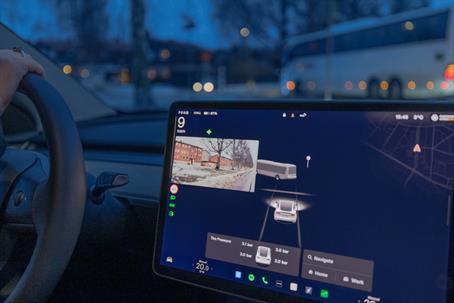
You can monitor this energy recovery through Tesla's power meter displayed on the touchscreen. The system shows real-time power usage with green indicating energy being fed back to the battery. This visual feedback helps drivers maximize efficiency but requires adaptation from those accustomed to conventional vehicles.
Differences between standard and low regen modes
Pre-2020 Tesla models offered two regenerative braking settings: standard and low. Standard mode provides aggressive deceleration when lifting off the accelerator, maximizing energy recovery but creating a distinctive stopping pattern. Low mode delivers gentler deceleration, requiring more use of the brake pedal—similar to traditional vehicles.
Nevertheless, Tesla eventually removed this option, presumably to maximize efficiency benefits. More recent models introduced a "Deceleration" category with Standard and Reduced options. These settings adjust how quickly the vehicle slows down upon releasing the accelerator.
Additionally, newer Tesla models (like Juniper) have further evolved this technology—applying regenerative braking even when pressing the brake pedal before engaging physical brakes. This essentially gives drivers both worlds: customizable pedal feel plus maximum energy recovery.
Deceleration patterns and rear-end crash risks
The unique deceleration characteristics of Tesla vehicles create distinct safety considerations for drivers in Fort Myers traffic conditions, especially regarding rear-end collision risks.
Measured deceleration in Tesla Model 3, S, and X
Comprehensive testing reveals Tesla's regenerative braking produces deceleration rates far exceeding traditional vehicles. In standard regenerative mode, Model 3 vehicles decelerate at -0.21g, Model S at -0.19g, and Model X at -0.20g. Even in low regenerative mode, these vehicles still slow down at -0.11g, -0.09g, and -0.11g respectively. These rates mean your Tesla slows dramatically merely by lifting off the accelerator—a response many following drivers might not anticipate.
Comparison with ICE vehicle coast-down rates
As opposed to Tesla's aggressive deceleration, conventional internal combustion engine (ICE) vehicles with automatic transmissions typically coast down at only -0.017g to -0.024g at 25 mph. Consequently, your Tesla slows approximately ten times faster than a conventional vehicle when you simply release the accelerator pedal. This dramatic difference creates a potentially dangerous situation since drivers behind you may not expect such rapid deceleration without seeing brake lights.
Multi-phase braking and its effect on following drivers
Perhaps most concerning is the multi-phase nature of Tesla's regenerative braking. Testing identified three distinct phases: ramp-up, steady-state, and ramp-down. Furthermore, a critical safety issue emerges regarding brake light activation—there's a measurable delay between when regenerative braking begins and when brake lights activate. The Model 3 experiences a 0.35-second delay, Model S a 0.55-second delay, and Model X a 0.59-second delay. These half-second gaps might seem minor, yet in bumper-to-bumper traffic, they can mean the difference between a safe stop and a Tesla rear end collision.
Moreover, Tesla's phantom braking phenomenon—where vehicles suddenly brake without apparent cause—has generated numerous complaints to the National Highway Traffic Safety Administration. This unexpected deceleration has reportedly caused multiple rear-end collisions, prompting increased vigilance among Tesla owners in Fort Myers.
Brake light delay and its role in rear-end collisions
One critical safety concern with Tesla vehicles stems from a disconnect between deceleration and visual warning signals provided to other drivers on the road.
How brake lights behave during regenerative braking
Unlike conventional vehicles where brake lights illuminate immediately upon pressing the brake pedal, Tesla's system works differently. Brake lights activate based on deceleration rate rather than pedal position. At highway speeds, Tesla Model S brake lights trigger only after reaching approximately 30 kW of regenerative braking power. This threshold generally corresponds to the point where deceleration becomes physically noticeable to passengers.
Measured delay times in Tesla models
Research reveals a concerning gap between when regenerative braking begins and when brake lights actually activate. This delay averages 0.35 seconds for Model 3, 0.55 seconds for Model S, and 0.59 seconds for Model X. During this half-second window, your vehicle is actively slowing down without warning following drivers.
Impact on driver reaction time in Fort Myers traffic
Correspondingly, these delays create dangerous scenarios in Fort Myers' congested traffic. Given that average driver reaction time typically takes about 1.5 seconds (0.75 seconds to notice changes plus 0.75 seconds to hit brakes), these additional half-second delays effectively reduce available response time by 30%. Subsequently, Tesla has introduced "Dynamic Brake Lights" that flash rapidly during forceful braking above 31 mph, though this feature remains unavailable in the US due to regulatory restrictions.
Accident reconstruction and legal implications
Investigating Tesla rear end crashes presents unique legal challenges compared to conventional vehicle accidents. Indeed, the distinctive behavior of regenerative braking systems creates complex scenarios for accident reconstruction specialists.
Challenges in proving brake application
A key component in accident testimony involves drivers' claims about brake application. In conventional vehicles, this is straightforward—the brake pedal was either pressed or not. With Tesla vehicles, however, deceleration occurs immediately when releasing the accelerator, often without activating brake lights. This creates uncertainty about whether the driver intentionally slowed down, potentially complicating liability determinations.
How regenerative braking complicates testimony
Regenerative braking fundamentally alters driver behavior patterns. One California teen initially failed his driving test because the examiner didn't understand Tesla's regenerative braking system. Similarly, courts have seen cases where drivers claimed they merely lifted off the accelerator rather than applying brakes before a collision. This distinction profoundly impacts fault determination—was a sudden stop intentional or automatic?
Use of vehicle data logs in crash analysis
Fortunately, Teslas store extensive data that can clarify accident circumstances. Their Event Data Recorder (EDR) captures crucial information including:
Vehicle speed
Accelerator and brake usage
Steering inputs
System warnings
This data requires specialized tools to extract and interpret properly. For Model 3, S, and X vehicles, data is stored in both the Media Control Unit and external storage.
Tesla rear end collision repair cost considerations
Tesla rear end collision repair costs often shock owners. Average repair bills following rear-end collisions typically range from $12,500 to $20,000. Even seemingly minor damage can reach $33,000 before corrections. These high costs stem from Tesla's specialized components, limited repair network, and complex electronics integration.
Conclusion
Understanding Tesla's regenerative braking system proves essential for safe driving in Fort Myers. After all, Tesla vehicles decelerate approximately ten times faster than conventional cars when you simply release the accelerator pedal. This dramatic difference, coupled with the concerning delay in brake light activation, creates a perfect storm for rear-end collisions.
Your Tesla might be slowing down significantly before other drivers receive any visual warning of deceleration. These half-second delays substantially reduce reaction time for following drivers, especially in congested Fort Myers traffic. Additionally, the multi-phase nature of regenerative braking and occasional phantom braking incidents further complicate predictability on the road.
Tesla owners must recognize these unique driving characteristics differ substantially from traditional vehicles. Likewise, other drivers should maintain extra following distance when traveling behind Tesla vehicles due to their distinctive stopping patterns.
Should you experience a Tesla rear-end collision, remember the accident reconstruction will likely involve complex data analysis from vehicle logs. Furthermore, repair costs typically range from $12,500 to $20,000 due to specialized components and limited repair options.
While regenerative braking offers impressive efficiency benefits by recovering approximately 70% of kinetic energy during deceleration, this technology clearly comes with safety trade-offs. Tesla's significantly higher rate of rear-end crashes suggests the need for enhanced driver education, improved warning systems, and potentially revised regulations to address these unique safety challenges on Fort Myers roads.
Key Takeaways
Tesla's regenerative braking technology creates unique safety challenges that Fort Myers drivers need to understand to prevent rear-end collisions.
• Tesla vehicles decelerate 10 times faster than conventional cars when lifting off the accelerator, creating unexpected stopping patterns for following drivers.
• Brake lights activate with a dangerous 0.35-0.59 second delay after regenerative braking begins, reducing reaction time by 30% in traffic situations.
• Tesla experiences 23.54 rear-end crashes per 1,000 drivers—significantly higher than other vehicle brands due to these distinctive braking characteristics.
• Accident reconstruction becomes complex as drivers can claim they only "lifted off the accelerator" rather than actively braking, complicating legal liability.
• Repair costs for Tesla rear-end collisions typically range from $12,500-$20,000 due to specialized components and limited repair networks.
The key safety concern isn't the technology itself, but the gap between how Tesla vehicles behave versus driver expectations. Both Tesla owners and other motorists need increased awareness of these unique deceleration patterns to maintain safe following distances and prevent costly accidents on Fort Myers roads.
FAQs
Q1. How does regenerative braking in Tesla vehicles differ from traditional braking? Regenerative braking in Teslas converts kinetic energy into electricity, slowing the vehicle when the driver releases the accelerator. This system can decelerate the car up to ten times faster than conventional vehicles coasting, potentially surprising following drivers.
Q2. Are Tesla vehicles more prone to rear-end collisions? Yes, statistics show that Tesla vehicles experience 23.54 rear-end crashes per 1,000 drivers, which is significantly higher than other vehicle brands. This increased risk is partly attributed to the unique deceleration patterns of regenerative braking.
Q3. Is there a delay in brake light activation during regenerative braking? Yes, there is a measurable delay between when regenerative braking begins and when brake lights activate in Tesla vehicles. This delay ranges from 0.35 to 0.59 seconds depending on the model, which can reduce reaction time for following drivers by about 30%.
Q4. How does regenerative braking affect accident reconstruction and legal liability? Regenerative braking complicates accident reconstruction because deceleration can occur without traditional brake application. This can make it challenging to determine if a driver intentionally slowed down or if it was an automatic function of the vehicle, potentially impacting liability determinations.
Q5. What are the typical repair costs for a Tesla after a rear-end collision? Repair costs for Tesla vehicles following rear-end collisions are often higher than expected, typically ranging from $12,500 to $20,000. These high costs are due to Tesla's specialized components, limited repair network, and complex electronics integration.
The information on this website is for general information purposes only. Nothing on this site should be taken as legal advice for any individual case or situation. This information is not intended to create, and receipt or viewing does not constitute an attorney-client relationship.