
Can Tesla Self Driving Autopilot Actually Prevent Fort Myers DUI Car Accidents?
Drunk driving claims 28 lives every day in the United States—approximately one person every 52 minutes according to NHTSA data. With Tesla self driving accidents making headlines, you might wonder if this technology could actually help prevent the more than 10,000 annual fatalities caused by impaired drivers.
Although Tesla's Autopilot system has faced scrutiny after being implicated in 11 crashes with parked emergency vehicles, the technology has also demonstrated life-saving potential. In fact, there are documented cases where Autopilot has safely stopped vehicles when drivers became unresponsive. Despite these promising instances, questions remain about whether Tesla Autopilot is safe enough to truly make a difference in preventing DUI accidents. Furthermore, many wonder if you can legally get a DUI while using Tesla Autopilot, or if a Tesla can actually drive you home when you're intoxicated.
In this article, you'll discover the truth about Tesla's self-driving capabilities in preventing Fort Myers DUI accidents, what happens when Autopilot detects an unresponsive driver, and what the statistics reveal about Tesla self-driving accident rates compared to human-operated vehicles.
How Tesla Autopilot Responded in a Real DUI Case
A real-life incident in Fort Myers reveals how Tesla's Autopilot technology responds when drivers become unresponsive—showcasing both the system's capabilities and limitations in potential DUI situations.
The Fort Myers incident: what happened
One significant case involved a Tesla Model 3 owner who activated his vehicle's full self-driving beta mode after having dinner in Fort Lauderdale. With several drinks in his system, he engaged the auto-navigate feature for the 12-mile journey home. Shortly afterward, an off-duty officer spotted the Tesla driving erratically on I-95 and reported it. By the time state troopers reached the scene, they discovered something remarkable—the Tesla had already pulled over safely onto the shoulder, with the driver unconscious behind the wheel. The driver's breathalyzer test registered a blood alcohol concentration (BAC) of 0.10, exceeding Florida's legal limit.
How Autopilot detected driver inattention
The Tesla's autonomous systems had operated as designed. After detecting prolonged driver inactivity, the vehicle initiated its emergency protocols. Vehicle log data obtained through subpoena later confirmed that the Model 3 had navigated correctly for over 11 miles before executing a safety stop. The system detected that the driver hadn't touched the steering wheel for several miles, which triggered the emergency pull-over sequence.
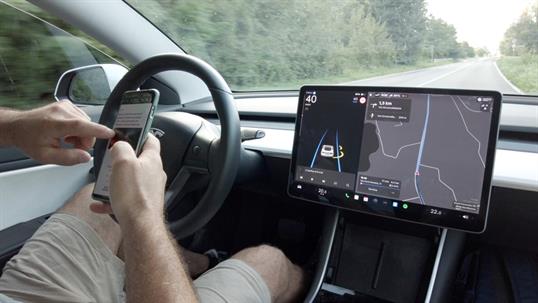
Tesla vehicles equipped with this technology use cabin cameras to monitor driver attentiveness when Autopilot is engaged. When these systems detect a driver's eyes wandering from the road, they reduce the amount of time the driver can have hands off the wheel before warnings are triggered. However, it's worth noting that Consumer Reports testing found that as long as a driver's hands remain on the wheel, the system doesn't differentiate between attentive and inattentive drivers.
Police intervention and vehicle stop
Upon arrival, troopers woke the unconscious driver and conducted a DUI assessment before placing him under arrest. Nevertheless, the legal outcome proved surprising. The defense team secured the vehicle's log data, which confirmed the autonomous system had functioned properly throughout the journey. They successfully argued that the driver wasn't in "actual control" of the vehicle since the Tesla had independently executed safety measures without human intervention. Ultimately, the court dismissed the charges, creating an intriguing precedent for Tesla self driving accidents cases involving impaired drivers.
The Bigger Picture: Drunk Driving in Fort Myers and Beyond
Fort Myers faces a significant drunk driving problem that mirrors broader issues throughout Florida. Understanding these statistics provides crucial context for evaluating whether Tesla's self-driving technology could potentially reduce DUI incidents.
DUI statistics in Fort Myers and Florida
The numbers paint a concerning picture for Fort Myers. Through July 2021, the city recorded 241 DUI arrests, nearly matching the entire 2020 total of 250. Nearby Cape Coral showed similar trends with 428 arrests by mid-2021. Notably, Florida's 20th Judicial District, which includes Fort Myers, had the highest DUI arrest rate in the entire state among 2018's 32,177 statewide arrests.
Florida exceeds the national average for drunk driving fatalities with 3.8 deaths per 100,000 residents versus the U.S. average of 3.1. Within Lee County specifically, 2021 saw 363 DUI collisions resulting in 47 deaths—a significantly higher rate than neighboring Collier County, which had 101 collisions and 19 fatalities despite having roughly half the population.
How many Tesla self driving accidents involve DUI
While comprehensive data specifically tracking Tesla self-driving accidents involving impaired drivers remains limited, certain cases highlight the intersection of alcohol and autonomous technology. One notable example involved a toxicology report showing a driver with a blood alcohol content of 0.25 percent—more than three times the legal limit—who crashed while driving at approximately 99 mph. Tesla maintained that its self-driving features automatically disengage at speeds above 85 mph.
Can a Tesla drive you home drunk?
Technically, Tesla's current systems cannot legally or safely serve as a designated driver. Despite what some owners believe, Tesla vehicles with Autopilot or Full Self-Driving capabilities still require an attentive, sober driver. Multiple experts and legal authorities confirm you can still be charged with DUI while using Tesla's autonomous features.
One Tesla owner admitted on Twitter Spaces that the system drove him home "flawlessly" while he was intoxicated—a dangerous misconception. Similarly, in 2022, a Tesla employee reportedly crashed and died after attempting to use FSD following day drinking. Consequently, experts emphasize that current Tesla systems are classified as Level 2 or 3 automation, requiring human supervision at all times.
Can Tesla Autopilot Really Prevent DUI Accidents?
Tesla's autonomous driving technology has captured public attention, but its actual capabilities in preventing DUI accidents require careful examination beyond the marketing hype.
How Autopilot handles unresponsive drivers
When a driver becomes unresponsive, Tesla's system initiates a series of escalating warnings requiring driver attention. If these alerts go unanswered, the vehicle gradually slows down, activates hazard lights, and eventually comes to a complete stop. The cabin camera continuously monitors driver attentiveness when Autopilot is engaged. Importantly, if you repeatedly ignore prompts to apply force to the steering wheel or pay attention to the road, the system will disable Autopilot for the remainder of your drive.
Tesla's safety features in DUI scenarios
Tesla vehicles equipped with Autopilot show impressive safety statistics. Indeed, in Q2 2025, Tesla recorded only one crash for every 6.69 million miles driven with Autopilot activated, compared to one crash every 702,000 miles for the national average. Standard safety features include automatic emergency braking, forward collision warning, and obstacle-aware acceleration. These systems can potentially mitigate risks when a driver is impaired.
Limitations of current Full Self Driving (FSD) tech
Despite its name, FSD does not make the vehicle fully autonomous. The technology remains classified as Level 2 automation, requiring constant driver supervision. Tesla explicitly states that FSD "does not make Model 3 autonomous and requires a fully attentive driver ready to take immediate action". Additionally, FSD Beta can actually increase stress levels as drivers must constantly monitor for unsafe system behavior.
Is Tesla Autopilot safe for impaired drivers?
Plainly put, no. Current Tesla systems cannot legally or safely function as designated drivers. You can absolutely be charged with DUI while using Autopilot. The legal requirement remains clear: the driver must be sober and capable of taking control at any moment. Attempting to use Autopilot while intoxicated creates dangerous scenarios and misconceptions about the technology's capabilities.
The Risks and Misconceptions Around Tesla Self Driving
Many Tesla owners misunderstand the capabilities of their vehicle's autonomous features, creating dangerous situations on roads nationwide.
Can you get a DUI with Tesla Autopilot?
Yes, you can absolutely get a DUI while using Tesla's Autopilot. The legal system treats drivers in Teslas the same as those in traditional vehicles regarding DUI charges. In 2021, a driver was arrested on suspicion of DUI even though the car was in Autopilot mode. Courts consistently consider you legally responsible for the vehicle's operation regardless of automation level.
Tesla self driving car accidents: what the data says
Within just 10 months, Tesla vehicles accounted for 273 crashes (nearly 70%) among all cars with advanced driver-assist systems. Moreover, Tesla's safety report shows one crash per 6.69 million miles when using Autopilot versus one crash per 963,000 miles without it. LendingTree insurance found Tesla drivers had 26.67 accidents per 1,000 drivers—the highest rate among all auto brands.
Why driver attention is still required
Tesla's own manual explicitly states that Autopilot requires "a fully attentive driver". The cabin camera monitors driver attentiveness; hence, if you repeatedly ignore prompts, the system disables for the remainder of your drive.
Tesla self driving fatal accidents: known cases
As of October 2024, Tesla Autopilot has been involved in fifty-nine reported fatalities. In Florida, a jury found Tesla partly liable for a 2019 crash that killed a pedestrian.
Conclusion
Tesla's Autopilot technology presents promising potential for reducing certain risks associated with impaired driving, especially through its emergency response capabilities. Nevertheless, the system falls significantly short of eliminating DUI dangers altogether. Though Autopilot has successfully stopped vehicles with unresponsive drivers, this technology currently operates at Level 2 automation, requiring constant, alert human supervision.
Despite some impressive safety statistics, Tesla vehicles still account for a disproportionate number of crashes among cars with advanced driver-assist systems. Therefore, any belief that your Tesla can serve as a designated driver remains both dangerous and legally indefensible. You will face DUI charges when operating a Tesla while intoxicated, regardless of whether Autopilot is engaged.
Fort Myers residents should particularly take note of these facts, considering the area's troubling DUI statistics. The city faces drunk driving rates that exceed both state and national averages, making proper understanding of autonomous vehicle limitations essential for public safety.
Tesla self-driving technology undoubtedly offers valuable safety features that might mitigate certain accident risks. However, the current technology cannot replace responsible decision-making. The safest approach remains straightforward – plan for a sober ride home before your first drink. After all, while technology continues advancing rapidly, no autonomous system currently available legally or practically removes your responsibility as the driver.
Key Takeaways
While Tesla's Autopilot shows promise in emergency situations, it cannot replace responsible decision-making when it comes to drunk driving prevention.
• Tesla Autopilot requires constant driver supervision - Despite its name, Full Self Driving operates at Level 2 automation and needs an alert, sober driver ready to take control at any moment.
• You can still get a DUI while using Autopilot - Courts treat Tesla drivers the same as traditional vehicle operators, and you remain legally responsible regardless of automation features.
• Autopilot can detect unresponsive drivers and safely stop - The system initiates emergency protocols when drivers become inattentive, gradually slowing down and pulling over safely.
• Tesla vehicles show mixed safety results - While recording one crash per 6.69 million Autopilot miles versus 702,000 miles nationally, Teslas account for 70% of crashes among advanced driver-assist vehicles.
• Fort Myers faces severe DUI challenges - The city recorded 241 DUI arrests through July 2021, with Florida's 20th Judicial District having the state's highest DUI arrest rate.
The bottom line: Tesla's technology offers valuable safety features but cannot legally or safely serve as a designated driver. Plan for sober transportation before drinking—no current autonomous system removes your responsibility as the driver.
FAQs
Q1. Can you be charged with a DUI while using Tesla's Autopilot? Yes, you can be charged with a DUI while using Tesla's Autopilot. The legal system treats drivers in Teslas the same as those in traditional vehicles regarding DUI charges. You are still considered legally responsible for the vehicle's operation, regardless of the automation level.
Q2. Is Tesla's Full Self-Driving feature legal in Florida? Yes, Tesla's Full Self-Driving feature is legal in Florida. However, it's important to note that this technology still requires constant driver supervision and does not make the vehicle fully autonomous.
Q3. Does Tesla's Autopilot actually reduce accident rates? According to Tesla's safety reports, vehicles using Autopilot technology tend to crash less frequently than the national average. In Q2 2025, Tesla recorded one crash for every 6.69 million miles driven with Autopilot activated, compared to one crash every 702,000 miles for the national average.
Q4. How does Tesla's Autopilot respond to an unresponsive driver? When a driver becomes unresponsive, Tesla's system initiates a series of escalating warnings. If these alerts go unanswered, the vehicle gradually slows down, activates hazard lights, and eventually comes to a complete stop.
Q5. Can Tesla's Autopilot safely drive you home if you're intoxicated? No, Tesla's Autopilot cannot safely or legally serve as a designated driver. The system requires a sober, attentive driver ready to take control at any moment. Attempting to use Autopilot while intoxicated is dangerous and can result in DUI charges.
The information on this website is for general information purposes only. Nothing on this site should be taken as legal advice for any individual case or situation. This information is not intended to create, and receipt or viewing does not constitute an attorney-client relationship.