How to Prove Tesla Self Driving Autopilot Use in Florida Accident Claims
Tesla Autopilot accidents raise serious concerns. Reports show over 730 crashes since 2014, with at least 17 deaths. Tesla's "Full Self-Driving" software has seen explosive growth from 12,000 vehicles to nearly 400,000 in just one year. These numbers paint a troubling picture.
Florida's legal landscape makes liability complex after Tesla Autopilot crashes. The state holds drivers responsible for safe vehicle operation, even with advanced technology like Tesla Autopilot. Florida's comparative negligence rule blocks recovery if you bear more than 50% of the fault. This creates roadblocks for accident victims who seek compensation.
A Miami jury made history in 2025. They awarded over $240 million in damages, including $200 million in punitive damages. The verdict found Tesla partly responsible for a fatal 2019 crash linked to its Autopilot system. This marked the first U.S. case that held Tesla liable in an Autopilot-related wrongful death.
Proving fault in Tesla Autopilot accidents needs special expertise. Smart attorneys team up with accident reconstruction specialists and vehicle-data experts. These experts can access Tesla's internal driving logs - vital evidence that shows the system's actions before a crash. Such data often proves vital to establish Tesla's responsibility for system failures.
Understanding Tesla Autopilot and Florida Law
Tesla's Autopilot system makes many drivers confused about what it can actually do. The system's capabilities and Florida's legal framework are vital factors to determine liability after a tesla autopilot accident.
What Tesla Autopilot can and cannot do
The name Autopilot might suggest full autonomy, but that's not the case. Tesla's system is a Level 2 advanced driver assistance system. The system has these features:
Traffic-Aware Cruise Control: Maintains speed and following distance
Autosteer: Keeps the vehicle centered in its lane
Automatic Lane Changes: Changes lanes when driver activates turn signal
Autopark: Finds and maneuvers into parking spots
Summon: Allows remote movement of the parked car
The system doesn't recognize traffic lights or stop signs without extra features. Tesla vehicles work at Level 2 automation, so drivers must supervise them continuously. Tesla's data shows vehicles using Autopilot technology had one crash for every 6.69 million miles driven in Q2 2025. Tesla drivers not using Autopilot had one crash per 963,000 miles.
Is Tesla Autopilot legal in Florida?
The answer is yes. Florida Statute 316.85 allows autonomous vehicles to operate whatever the physical presence of a human operator. This law mostly deals with fully autonomous vehicles rather than Tesla's current Level 2 system.
The Benavides v. Tesla case altered the legal world. Jurors awarded over $240 million after they found Tesla partly responsible for a fatal 2019 accident. This 4-year old verdict showed that Florida law holds human drivers responsible to maintain control, even with advanced driver assistance.
Why driver attention is still required
Advanced technology doesn't eliminate the need for driver attention. Tesla makes it clear that "Autopilot is intended to be used only with a fully attentive driver". Drivers who don't pay attention get visual and audio warnings. The system locks them out if they ignore these warnings.
Florida law expects drivers to stay alert while using Autopilot. Board Certified Florida attorney Brian O. Sutter puts it this way: "Technology in vehicles can be incredible—but it doesn't replace human judgment. Even with Autopilot, Florida law still expects the driver to stay alert and make decisions that keep everyone safe".
How to Prove Autopilot Was Active During a Crash
You need to act fast to secure evidence after a Tesla Autopilot accident. Critical data could be lost without proper documentation, making it hard to prove that Autopilot was running during the crash.
Accessing Tesla's Event Data Recorder (EDR)
Your Tesla's Event Data Recorder works like a "black box" and captures vital telemetry data seconds before a collision. The recorder tracks vehicle speed, braking status, steering inputs, and airbag deployment—these technical details are crucial for accident reconstruction. Here's how to get this evidence:
Get a Vehicle Data Report through Tesla's app or service center
Let your attorney send a formal legal request if Tesla doesn't cooperate
Work with forensic specialists who can extract and interpret the data correctly
EDR data needs specialized tools and expertise. This information becomes extra valuable when you combine it with visual evidence to build a complete accident reconstruction.
Using dashcam and cabin camera footage
Tesla vehicles record continuously through multiple cameras, which gives you great evidence. Right after an accident, tap "Save Dashcam" or say "save clip" so the footage isn't overwritten. The cabin camera sits above the rearview mirror and checks if you're paying attention. It also sends audible alerts when Autopilot is running.
Here's how to save video evidence:
Take out the USB drive with footage as soon as it's safe
Make backup copies on external drives or cloud storage
Keep track of who handles the evidence for legal reasons
Preserving system alerts and dashboard warnings
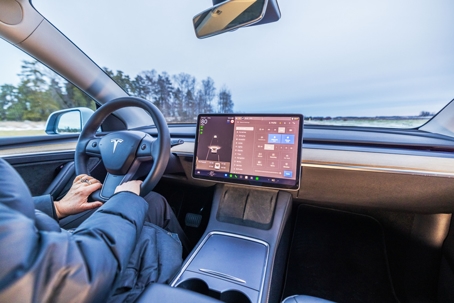
Tesla vehicles show system alerts that prove when Autopilot was on. Take photos of the touchscreen showing Autopilot/FSD status and software details (Controls > Software). Look for a blue steering-wheel icon on the driver display when Autopilot is running—document this right away.
Avoiding over-the-air updates after a crash
Tesla sends software updates wirelessly that could erase important evidence. The Benavides case showed that Tesla tried to erase uploaded data after the crash. Here's how to protect your evidence:
Switch off WiFi to stop automatic downloads
Say no to all update notifications until data is safely extracted
Never reset the infotainment system
Factory resets can make Tesla temporarily "lose track" of pending updates, which helps protect your evidence.
Legal Framework for Tesla Autopilot Accident Claims in Florida
The legal scene around Tesla Autopilot accidents keeps changing as courts set new rules about who's responsible when self-driving tech fails.
Florida's comparative negligence rule explained
Florida uses a modified comparative negligence standard that affects Tesla Autopilot claims by a lot. This rule stops you from getting money if you're more than 50% at fault for the crash. This becomes important in Autopilot cases because driver distraction often leads to accidents. The Benavides v. Tesla case showed this clearly - the jury found the driver 67% at fault and Tesla 33% responsible, which meant a smaller payout.
When Tesla may be held liable for system failure
Tesla becomes responsible when Autopilot doesn't work right or behaves unexpectedly. They might be liable if:
Their software or design don't recognize road conditions properly
They don't warn users enough about what the system can't do
They skip vital software updates that could stop accidents
The Benavides case proved that letting Autopilot work in unsafe conditions breaks Florida's design defect laws.
Can you sue Tesla for Autopilot crashes?
You definitely can. A Miami court's $243 million verdict proves Tesla must answer for these accidents. This case made history as the first time a car's autopilot system was found responsible for a deadly crash. The court ordered$200 million in punitive damages because of Tesla's marketing claims.
How product liability applies to Tesla Autopilot
Product liability claims against Tesla usually focus on bad design, manufacturing issues, or poor user warnings. Courts have decided that Tesla's marketing promises about Autopilot—like saying vehicles "should not hit" obstacles—create expectations that are the foundations for liability claims when things go wrong.
Steps to Take After a Tesla Autopilot Accident
Your actions right after a Tesla Autopilot accident can make or break your case. These steps will protect your health and legal rights.
Call law enforcement and report Autopilot use
Start by calling 911 to get police and emergency services. Tell the dispatcher a Tesla with Autopilot was involved. Let the officers know Autopilot was involved in the crash. This detail will be documented in the official police report, which becomes key evidence for insurance claims and possible lawsuits.
Document the scene and vehicle status
Get all the evidence before anything changes:
Take photos of all vehicles, damage, road conditions, traffic signs, and weather conditions
Get witness contact details and quick statements while the memory is fresh
Take pictures of Tesla's dashboard that shows Autopilot status
Ask to preserve Tesla's Event Data Recorder (EDR) information right away
Tesla collisions need quick action because over-the-air updates might change important data.
Seek medical attention and keep records
You should get checked by a doctor even if you feel fine. Some serious conditions don't show symptoms right away. Keep detailed records of treatments, diagnoses, and medical costs.
Need a lawyer after an injury? Call Pittman Law Firm, P.L. today for a free consultation.
Contact a Florida Tesla Autopilot accident lawyer
Tesla technology and liability questions are complex. You need a lawyer who knows Autopilot cases. They'll help determine if Tesla should be held responsible for system failures and guide you through Florida's comparative negligence framework.
Conclusion
Tesla Autopilot accidents create special challenges under Florida law. You stay legally responsible for operating your vehicle, even when you use automated features. Your case needs immediate evidence preservation—especially the Event Data Recorder information, dashcam footage, and system alerts. These could change through over-the-air updates.
Florida's modified comparative negligence rule makes things more complex. You can't recover damages if you're more than 50% at fault. The Benavides case showed that Tesla can be held liable when their systems fail. But proving this needs technical expertise and a full picture of evidence.
Quick action after an accident protects your health and legal rights. You should document everything, tell law enforcement about Autopilot use, and get medical help right away if you're hurt. The Pittman Law Firm, P.L. offers free consultations if you need a lawyer after an injury.
Tesla Autopilot technology keeps evolving, but knowing its limits and Florida's legal rules helps protect you. This applies both to proper system use before accidents and collecting evidence after. These cases are tough to handle, but good preparation and qualified legal help strengthen your position when you seek compensation.
Key Takeaways
Understanding how to prove Tesla Autopilot use in Florida accident claims is crucial for attorneys and accident victims, as these cases involve complex technology and evolving legal precedents that can significantly impact compensation outcomes.
• Preserve critical evidence immediately - Access Tesla's Event Data Recorder, save dashcam footage, and prevent over-the-air updates that could erase crucial crash data.
• Florida's 50% fault rule applies - Under comparative negligence law, you cannot recover damages if found more than 50% responsible, making evidence preservation vital.
• Tesla can be held liable for system failures - The landmark $240 million Benavides verdict proves Tesla may bear responsibility for design defects and inadequate warnings.
• Driver responsibility remains despite Autopilot - Florida law requires continuous attention even with Autopilot engaged, as it's only a Level 2 assistance system requiring human oversight.
• Document Autopilot use to police immediately - Explicitly report Autopilot engagement to law enforcement and photograph dashboard status to establish system activation during the crash.
The intersection of advanced automotive technology and traditional liability law creates unique challenges that require specialized legal expertise and immediate evidence preservation to build successful claims against both drivers and manufacturers.
FAQs
Q1. Is Tesla Autopilot legal to use in Florida? Yes, Tesla Autopilot is legal to use in Florida. The state allows autonomous vehicle operation, including advanced driver assistance systems like Autopilot. However, drivers are still required to maintain control and stay alert while using these features.
Q2. Can I sue Tesla if I'm involved in an accident while using Autopilot? Yes, you can sue Tesla for accidents involving Autopilot. Recent legal precedents, such as the landmark Benavides case, have established that Tesla can be held liable for system failures or design defects in certain circumstances.
Q3. How can I prove Autopilot was active during a crash? To prove Autopilot was active, you should immediately preserve evidence such as the Event Data Recorder (EDR) information, dashcam footage, and system alerts. It's crucial to photograph the dashboard showing Autopilot status and report its use to law enforcement at the scene.
Q4. What should I do immediately after a Tesla Autopilot accident? After a Tesla Autopilot accident, call 911 and report Autopilot use to the police. Document the scene thoroughly, including photos of vehicle damage and road conditions. Seek medical attention, even if injuries aren't apparent, and contact an experienced Tesla Autopilot accident lawyer.
Q5. How does Florida's comparative negligence rule affect Autopilot accident claims? Florida's modified comparative negligence rule can significantly impact Autopilot accident claims. If you're found to be more than 50% at fault for the accident, you may be barred from recovering damages. This makes preserving evidence of Autopilot's role in the accident crucial for your case.
The information on this website is for general information purposes only. Nothing on this site should be taken as legal advice for any individual case or situation. This information is not intended to create, and receipt or viewing does not constitute an attorney-client relationship with Pittman Law Firm, P.L.